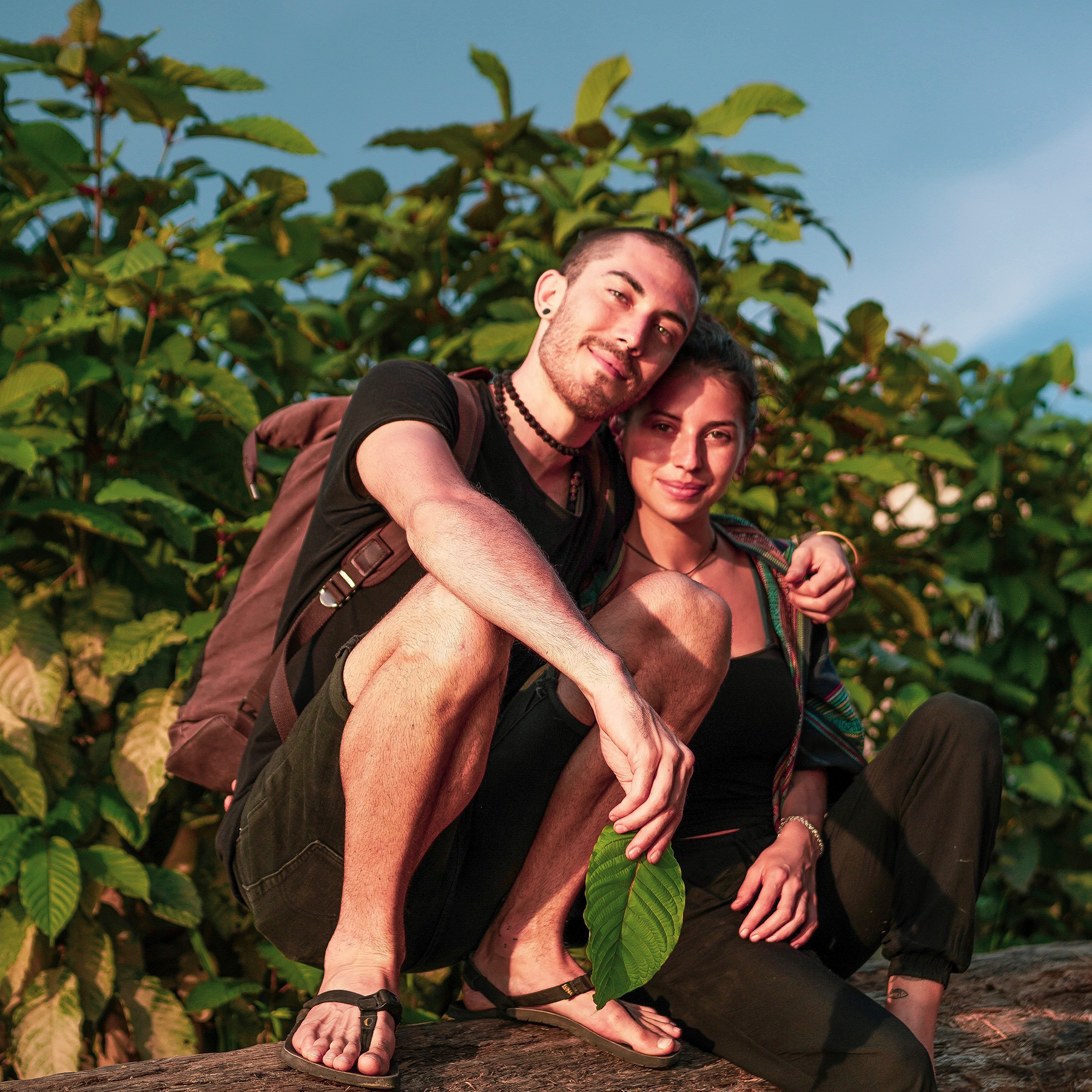
Ep 75: Inside the Kratom Industry: Emy & Oshin of Jaya Kratom Share Their Journey
Emy and Oshin of Jaya Kratom share their journey from Borneo field research to building a Portland, OR shop, debunking myths, and showing how small-batch sourcing benefits people and planet.

 Apple Podcasts

 Spotify

 YouTube

 Amazon Music

 Overcast

 iHeartRadio
In this episode, Emy & Oshin of Jaya Kratom share an insider view of the industry, from their field research in the rainforests of Borneo to building a Portland shop dedicated to education and transparency. They open up about what it was like living with farming communities, how Kratom supports families and preserves the rainforest, and the challenges they’ve seen firsthand in an industry often clouded by misinformation.
We also dive into myths about “strains,” the difference between large container shipments and small-batch sourcing, and why freshness and single-origin practices matter for consumers. Emy & Oshin’s journey offers a rare perspective that connects the roots of Kratom in Southeast Asia to its impact here in the U.S., making this conversation both eye-opening and inspiring for anyone who wants to understand the plant more deeply.
🍃 RELATED LINKS
Jaya Kratom - get 10% off with code KratomStories
Jaya's Blog - it's filled with great info!
See photos from the trip discussed in this episode
The Kratom Gals livestream
STAY CONNECTED with us by subscribing to our newsletter! Sign up at KratomStoriesPodcast.com
JOIN OUR VIBRANT KRATOM REAL TALK COMMUNITY ON SKOOL:
Skool.com/KratomRealTalk
🍃 MADALYN'S RECOMMENDED VENDORS 🍃
Christopher's Organic Botanicals - 10% off with code: KratomStories
New Hope Botanicals - 10% off with code: KratomStories
Super Speciosa - 20% off with code: KratomStories
Tap here for full list of Madalyn's recommended vendors along with coupon codes!
🍃 FOLLOW US
THE KRATOM GALS is a dose of real talk, real stories, and relentless advocacy. Every week, we dive into the latest Kratom headlines, react to videos, and call out misinformation with facts and fierce passion. It's not just a show, it’s a movement to protect the plant we love and the people who rely on it. YouTube.com/@KratomStories
Please note: The views and experiences shared in this episode are personal and unique to the guest. Kratom, while featured prominently in these stories, is a botanical substance that is unregulated in the U.S. and various countries around the world. The Kratom Stories Podcast and its host, Madalyn Sklar, do not endorse, promote, or encourage the use of Kratom. We simply aim to shed light on personal experiences and narratives related to this plant. If you're considering using Kratom, we strongly urge you to seek professional medical advice, conduct thorough research, and comply with all local laws and guidelines.
0:00 So kratom strains really do not exist. There is just one type of kratom tree growing fundamentally. I think one of the most kind of funny and evocative stories of that was when we first went out and we first arrived out in the middle of Borneo. And we're with these, you know, some of the first kratom farms that we were on. And we're talking to these old Indonesian guys that were the kratom farmers there. And we're saying like, so OK, so tell me about your land here. Tell me what's going on. What what are the different strains you're growing? You know, what do you have growing here? What do you have growing here? Like, you know, give us a tour of, of your operations and these old Indonesian, you know, kratom growers looking at us very confused, like silly foreigners.
0:42 What are you talking about? Like, this is an old kratom tree. And they're like, yeah, those, those are our neighbors kratom trees. And that's a big one. That's a small one. This one is flowering. And this notion of there being different strains just completely was was was going over their head. So I'm here with Emmy and Ocean, a couple who are doing an amazing job in the kratom industry. Been super excited to bring them on to share their message about kratom and the really amazing things they're doing. Emmy and Ocean, thank you all for coming on the podcast to come share your incredible story with us. Hey, thank you so much.
1:29 We're so happy to be here. We've been following your work for a long time and are just really, really impressed by all the advocacy you've been doing in the atomosphere and are so happy to speak with you today. Yeah. To share our share our story and have a conversation with you. Absolutely. And I'm so glad you all reached out several months back. You know, it, I went, I mean, I get contacted by a lot of companies and I'm very particular about who I ever want to be aligned with and, and talk to you because, you know, honestly, in this industry, there are a lot of shady companies out there and people that don't care about consumers. They just care about making money. And when I went to your website, I was super impressed by your story and what you guys are doing in this industry is, is phenomenal.
2:16 And I want to help spread that message far and wide. So that's why I'm just so excited to have you here to, to talk to us today. And why don't we start with with y'all sharing a little bit about yourself before Kratom, your life before Kratom, and then how kratom came into the picture. Yeah, absolutely. So yeah, my name is Osheen. I am the Co founder of Jaya Kratom along with Emmy here. And so I've lived all around the world in a number of different places, but have spent a lot of my formative years here in Portland, OR. So that is where we have our our headquarters, we have our brick and mortar Cortana dispensary, and we also have our warehouse and all our operations here in Portland. And yeah, spent a lot of years here throughout high school and university.
3:05 And now we've been back here for about 5 years. And yeah, absolutely love the Pacific Northwest and we have an incredible kratom community out here as well. There's a huge kratom community, a lot of people that are turned onto the plant. And yeah, very happy to to be home here. And my kratom story actually begins quite a long time ago in Portland. It's been a part of my life since I would say at least 2012, if not before. And I had the good fortune of finding kratom way back then in a small herbalist shop in Portland. And I went to university at Reed College here, which is a very academic super, you know, rigorous kind of life of the mind school, a lot of hours in the library and found that to be super challenging and really was looking for something to help me with long hours in the library and writing huge papers. And, you know, that really rigorous academia side that I found to be quite challenging.
4:17 And I had read about Katam and some old botany books, had heard, you know, a little bit about it here and there in the library, was trying to find information. It was, there was not too much about it, but I'd heard about how it had been used for, you know, working and productivity as a kind of a caffeine alternative in addition to a number of other uses. And yeah, managed to find some and was blown away by how much it helped me and, and you know, made spending 8 hours in the library working fun and engaging. And I found it to be just invaluable in my life for working productivity. And then found it, you know, really, really useful in a number of other ways from doing things with sports or recovery or, you know, just socializing and with friends in a healthier way than than alcohol. And, and yeah, I found it to be just a huge really beneficial part of my life from from then on, so. And then on my side, I'm Emmy, I'm British, as you may be able to maybe out to hear.
5:21 And so growing up in England, kratom was actually banned in the UK quite a long time ago. So it never really entered the public consciousness in the way it has here. So I actually didn't encounter kratom until quite a lot later when we were actually living in Indonesia completely unrelated to kratom in 2019. And so I was really lucky in that way that my first introduction to Gratan was really like in the source and straight this beautiful, fresh, lovely green, bright, like beautiful Gratan. And actually remember the first time trying for Tom and the first time really feeling its effects, just drinking a tea with Osheen one day and then going out on a walk by myself and just walking through the beautiful Indonesian countryside and just felt like absolutely fantastic and like myself on my very best day where I was so chatty and feeling really like social and positive. And just remember being like, wow, this is something new. This is something I've never experienced before with a plant. And it's just a really incredible and mind blowing experience.
6:30 I'd never heard of it before. So that's where, you know, went back home, wanted to research it and find out some information about it. And back then in 20/20/18, I guess 2019, the information that you could find on kratom was just so limited. There were barely even any photographs online. And I was top photographer at the time. So this really triggered my interest that you didn't really have any images of this plant. That was just seemed like so exceptional that everybody seemed like they should know about. And in my mind, it's like, it's like I stumbled upon coffee for the first time, but nobody had told me about it until I was in my 20s. So, yeah, that really just LED us down this rabbit hole of, of research and LED us to putting together project because being in Indonesia, we're like, hey, we're only like 2 hours away by flight from Borneo.
7:28 She's also part of Indonesia and we're so close to the source. And so all these questions that were coming up and we're unable to answer at the time, we're like, hey, we can go and answer those for ourselves. And so, yeah, we put together a research project and everything kind of LED from there. That's incredible. So you're like, let's just go to Borneo. Let's go to the source. Yeah, we really say that it's like, it's kind of like the energy that we got from Cortana, the focus and the the positive feelings and uplift that we got from it was really the the essence of what made us be capable of putting together this project. So we really say that we've been carried by this leaf around the world to to research it and then to open a company. That is incredible.
8:13 So I bet you'll have amazing stories of your research. How? How much time did y'all spend over there doing all that? So we've spent probably pushing 8 weeks actually out in remote Borneo, sleeping on katam farms, travelling all over, really ingrained in the community, way out in the Borneo rainforest. But then we've also done a lot of other katam research in Thailand and Malaysia and other parts of Southeast Asia. So All in all, we've been at it for, you know, kind of years in total. But yeah, in that the bulk of our research and, and where we source all of our Katam from is coming from, from out in the Borneo rainforest, from communities that that we know really well and from, from people that we really regard as friends. And yeah, we just had the the great fortune to to get research funding to go out and, and study Katam cultivation. And in fact, our whole initial research was, was way before we were involved in the kratom vendorsphere whatsoever and was just a passion project for us because we loved the plant. And we saw that there was a lot of misinformation about it or a lot of conflicting information.
9:31 There were just a whole lot of questions that we had and we saw others had about the kratom industry and, and where it's coming from and what makes good kratom, what makes bad kratom, all of that. So that's really what motivated us to, to get out there and get into the field. And I myself had had a, you know, a huge number of questions about the plants from from 2012 to, you know, 2018-2019 when we were getting out there in Indonesia, because I, like many people had, you know, fallen in love with kratom, have some amazing batches. But then I think especially back in the day, it's still now there's, you know, this constant discussion of, of, of, you know, why are there occasionally these batches that have very little effect or don't have very nice effects? What, what is the difference between these batches? What are the agricultural practices that go into creating really, you know, high alkaloid, really nice feeling for Tom and it, you know, again and again found amazing for Tom in Portland and then very poor quality for Tom. And that raised a lot of questions on my mind about, you know, what's going on out there.
10:37 Yeah, we have to. We have to go and and get out into the Borneo rainforest and figure it out. That is so interesting. So what was it like being in the rainforest and doing that reason, You know, majority of us here in the USI mean we just buy our Kratom, it's in a pouch and we scoop it into our tea or toss and wash or whatever we do with consuming it. And so incredibly different when you're actually over there having that experience. So talk a little more about that. Yeah. So I think to put it in perspective, Borneo's an absolutely massive island. It's four times the size of the UK, larger than Texas. It's absolutely huge, and it's bang on the equator.
11:19 And in Indonesia, Indonesia, it's called Kalimantan. Kalimantan in Sanskrit means land of the burning air because it's just like 35°C. So what a 95 Fahrenheit every single day, day and night, high humidity. It's a very, very intense place to be. And on top of that, the areas like kratom is growing and not at all the the areas where tourists go. So there's no tourism infrastructure. It's very few hotels or guest houses. So when we're spending time out there, it's really local. People have put us up and we're sleeping on somebody's floor for a week and staying in these little, like shacks made from kratom wood often. And going up, you know, 18 hours by car to the center of the island and then three hours on a rickety little boat to go to the kratom farms, which were growing on the kratom on the riverbanks of the Kapwis River.
12:20 So it's a very, very rugged, intense experience. But there is really some incredible communities out there, very, very remote and there's a wonderful hosting culture in Indonesia. So we're always wonderfully received and people always receive us with coffee and katam and beautiful meals. And so it's a really, really wonderful experience. And yeah, it's it can be challenging, but in a good way. Challenging, but in a good way. Yeah, very, very long boat and car rides and going way out by foot and yeah, very challenging. But everybody out in Borneo is just, you know, such an incredible community of people.
13:05 And it's just such a pleasure for us to to to be able to do this work and this research. And is, is truly a pleasure to, to be able to wander out into, into the forest or to people's kratom and, you know, eat the leaves fresh off the trees and, and interact with folks in that way and learn about the, the cultivation of the plants, but also the traditional community and, and how people have used it there for hundreds of years. Yeah, people are really excited usually to receive us it too, because we found almost systematically that unfortunately we were the actually the first people coming there to talk about Craton in many, many communities. They hadn't had anybody, despite these massive companies already existing in the US, they had never met any representatives from those companies coming out to visit the farms and to and to, you know, see what was going on.
13:54 And if they had, it would be for like, you know, 20 minutes, somebody would come through and shake some hands and then get a very sanitized tour of the of the Craton farm and then leave. So people were very happy to let us into their world and show us what was going on. And given that we were not at all on our very first trip, since we were not actually part of the industry at that point and nobody was under any pretense that they were going to sell us anything, we got a very unsanitized version of the Croton industry. So, you know, people went cleaning up before we arrived or trying to make everything seem perfect or only showing us the good things. We got very much the the full image of the good, the bad and the ugly of the crouton industry in the in Indonesia. That, that is so cool.
14:47 So what was your first impression when y'all were there experiencing that their first time? Well, I guess it could speak a little bit to the environmental factors of what's going on in Borneo, and that also ties into what it actually looks like out there. So you can fly into the cities on the coast of Borneo and there's no qatam growing there whatsoever. So you actually have to drive about 15 hours, 12:12 to, you know, 18 hours inland into the center of Borneo to find where Katam's really growing naturally and where these, you know, Katam communities are. And for, you know, the 1st 8 hours of that drive, you know, it's honestly heartbreaking 'cause you think, wow, you're out in the, in the, in this really remote place in the Borneo rainforest, you're gonna see orangutans and all this awesome wildlife and, and you know, rainforest and all this. And yeah, the first eight hours, it is really the, the forest has been clear cut.
15:41 There are palm oil plantations as far as the eye can see. And unfortunately, you know, that part of the world has really been devastated ecologically by the the rubber industry, rubber trees, palm oil and and logging. Those are really. Gold mining. Too gold mining, yeah. And those are really the three unfortunately super extractive, super damaging industries out there. So that's kind of what you're you're first faced with as you, as you go out into these, you know, super remote areas is the reality of, of yeah, of, you know, deforestation of palm oil and rubber. And then finally getting out deeper into kratom country, like we call it, you know, where you're, you're really out there.
16:23 And there's there's still forest and there's wild kratom and you're more remote. We got to learn about how the kratom industry is really providing this incredible alternative to these really badly paying, exploitative industries. And we got to meet with so many people that were just incredibly thankful for kratom becoming popular in the rest of the world because these really remote villages were able to, you know, make a living for themselves and their family and exist in their traditional communities without cutting down the forest, without, you know, ripping up the riverbanks, mining for gold, planting palm oil and the pesticides and fertilizers that go with all of all of the palm oil and rubber industry. And so we got to see this picture of how kratom is really this, you know, integral part of the answer to preserving the forest out there and allowing people to also maintain their traditional way of lives in their traditional communities and not, you know, travel great distances to find work logging or somewhere else.
17:31 And so so that was really a beautiful to see how Cortana is this plant that benefits so many lives in the US and Europe and all around the world, but indirectly through preserving ecology is also really benefiting the land and and then the people of of the Borneo rainforest in Indonesia. Yeah, it's one of the only industries out there where maybe even the only industry where it's where it's you can grow some kratom trees and make an income and keep that income within the community completely. Like a small amount of land will provide enough income with kratom to sustain and really improve people's livelihoods. We had the same story over and over again, which is really, really touching of people saying thanks to Kratom, I was able to send my kids to university for the first time and they're off in the in the city and then learning English too. So they're actually able to speak to buyers and and have this really wonderful relationship where they're then working to also improve their families business. And yeah, this really touching story of, yeah, kids being able to go to university for the first time, as well as a lot of the men saying that they were really happy because in the past, they'd had to go months at a time, logging off into remote parts of the forest and not see their families for months at a time.
18:55 But they were finally able to work within their village and stay with their kids and stay with their families rather than having to go and find work elsewhere. So that was a really, really inspiring story for us and not one that we really expected to to come across, but it was something we heard all over the place. And there's even now some studies were done by the Indonesian government that say that yes, 70% of the rubber plantations in West Borneo have been cut down, say non-native and replaced with kratom plantations because the kratom is native. So it grows a lot easier, the work is easier, the money's better, and everybody is very, very happy to have this, this plant become so popular.
19:40 And we talk a lot about people relying on kratom on the in the US and for various health reasons. So I'm just enjoying the plant. But it's really important to take it. Bear in mind too, the number of people who are relying on kratom economically out in out in Borneo. It's incredible and it makes. It makes you like want to support companies like yours even more that are working directly with these small farmers, these families that you all have spent a lot of time there, did all that research, got to know people and and seeing how this is affecting their lives.
20:21 Yeah, we had to really rewrite, rewrite the book on how the industry works in order to to make these relationships. Because normally some people who are supplying companies are living in the big city of Pontiac, which is an industrial city in Grosvenor Cotam. And they're actually just collecting. Or they have a guy in the remote areas who's collecting leaves and then who's shipping them to the city to be mailed and sent off. And we weren't happy with that system because it means that, you know, you have somebody doing a great job and then somebody doing a mediocre job and it's all mixed together and there's no accountability to, you know, harvest these at the right time and to and to be making a really high quality product. So we actually had to go and negotiate to make sure that we are directly in contact with every single farmer so that we can place orders directly with them and make sure that's only one, one community or families leaves that are being collected. And we know that they're doing a good job. And then we can keep that as one small batch instead of, you know, everything being mixed together as it usually is. Yeah, I think it's, it's it's really important to kind of paint a picture and always talking to this with with customers that come into our shop and we're telling them, OK, so everything we have here is small batch, but single origin also.
21:44 So it's not just a small shipment from a huge shipment, right? A small batch in single origin. So they'll all be coming from one particular Grove of trees that we've seen and know that they are planted in the optimal area rather, you know, wildly growing in their optimal habitat. And the leaves are only being harvested, you know, every four months as opposed to every two months. And, and all of these factors that lead to a great kratom and trying to just communicate to people that most of the kratom that enters the US is coming in 2040 ton container shipments. And to fulfill a container order like that, it's going to be, you know, 2 to maybe 500 different kratom collectors, growers, harvesters, etcetera, that are pooling their crop to fulfill this massive 2040 ton container shipment. And it's amazing that kratom has become more popular in the US and around the world.
22:40 It's helping so many people. This is an incredible thing, but it is also a double edged sword. And this, you know, large demand of kratom has caused a lot of corners to be cut where you have, let's say 500 different, you know, small kratom collectors pooling their crop for this massive order. And you know, maybe 50% of them are picking the leaf at the right time, letting it really mature. The trees are planted or, you know, wild harvested from the correct areas and it's super high quality. But then the other half maybe just, you know, you're getting paid by the kilo and you're just ripping them off and God knows what's in there and it's all gets mixed together, which really brings down the quality. And then a forty ton container shipment might take years to fully process through the system in the US and warehouses and different vendors to actually reach the final consumer. So, you know, the Cortana you're getting might be, you know, years old and from this enormous, enormous batch as opposed to just being from 1, you know, particular Grove of wild trees, for example, where it's going to be harvested regularly and a lot of care and attention is placed on that. That is so interesting.
23:47 So I think as just me, a typical cream consumer, it's something I have no knowledge about. And it makes sense that when it's, you know, the big companies and these big shipments that, you know, it is a process. It's got to get shipped all the way over here. It's got to be quarantined. They got to do the testing and that can take a long time. So by you all doing small batch, single origin, you're, you're basically saying that you can move through the process. You're not cutting corners, of course, but you're able to do this faster. So there's a fresher product. Yeah, exactly. Yeah, What we're always going for is that really bright green color that really. Yeah, really punchy, looks like matcha. And yeah, that's the first Craton that I had encountered. And it's so surprising to me sometimes when I'll see like Craton for sale around, which has got this like sad dark Gray color.
24:42 And then people are surprised that they don't like the flavor of it. And you know, when you have a really bright, beautiful, bold green Craton, it's got that really tasty matcha flavor that that I really appreciate. And that means that it's fresh and it's alive and it's. Yeah, it's just straight from the source. Yeah, I've definitely have noticed a different when I'm excited to, I make mine as a little swamp water tea. I don't like doing the toss and wash, but I also don't want to like sip it and make a big tea. I just like to mix up enough hot water or warm water to mix the powder and just let it cool off a bit. And for the longest time I was just drinking it hot with orange juice and that's so gross to me.
25:23 It is. But I like cool off a while, then I'll add some cold juice and it's not that bad and I drink it really fast and I get my pain relief, which I love. But I definitely notice a difference with certain companies, certain batches and with your Kratom, Jaya Kratom, I definitely can see that freshness and that how is different from most other ones. And not to say good, bad or indifferent, but like it's interesting how it seems like small batch kratom companies, the way they're doing things, getting it fresher. I can see a bit of a difference for me as that in consumer who's, you know, using it. So yeah, it's just. We always tell people it is a bitter plant, right? It will always have that strong bitter flavor, but that doesn't mean that it can't.
26:11 Also depends on the individual. Everybody's got a very different palette, but if it's been harvested at the right time and it's been dried really carefully and it's fresh and bright green, should have notes of matcha of tea, it should also be fresh. And you can really tell that. And then also, I believe also feel it in the effects when it's really, really fresh, high quality kratom like that. And yeah, I'm glad you've noticed and are appreciating that as well. Absolutely, and what's interesting with y'all's products is that you even have it on the package, you know a 15, this is coming from a 15 year old tree or you have one that's like 50 plus. And it's like the first time I used the kratom that said 50 plus.
26:54 I'm like, Oh my gosh, I'm about to consume kratom off off of a tree that is 50 at least 50 years old. That to me was mind blowing because you don't hear about that in the industry. You don't hear about the I mean, maybe I'm just geeky. I find it interesting. So talk a little what about that, How things are being harvested, the age of the tree, how this all make a difference for us in consumers? That's a great question. So we work pretty much exclusively everything except for our red currently is all wild harvested. And we find that that makes a really big difference because the trees are going to be planted, planted. They occur in their ideal natural habitat, right, which is along the banks of the river. So we often hear about, you know, the Kaplitz River is that massive river where most of the world's katama is coming from. And the trees will be naturally occurring. The wild katama trees are right on the riverbanks where the tap roots, the roots of the trees can reach down and have unlimited water, right?
27:55 They're water loving plants. And then you also get the phenomenon that every year the river will flood and overflow the banks and deposit super mineral rich, you know, silt. And so that is basically the natural fertilization process that occurs out in Borneo. And so if you're getting Kratom from these wild trees and their perfect habitat like that, they are, you know, getting as much water as they need and getting this mineral rich fertilization process. And so that's where we'll notice that the flavor will be a lot better and the potency will be a lot better. And there's not necessarily a direct correlation between age of tree and potency. It's not that a a 25 year old tree is always going to be more potent than a 20 year old tree and so on and so forth. But what we do notice is that these trees that are older and in their natural habitat are generally producing the best quality Kratom.
28:53 And as the industry has has evolved and become more popular, we are seeing a lot of these massive craton plantations where the trees are planted too close together. They're all planted in rows and then they'll often be harvested very frequently, right? So like every two months. And they might be coming from trees that are, you know, two to three years old. And they haven't really had the full amount of time to, to, to mature and get a really, really solid alkaloid package and to, to be, you know, be fully ready, ready for harvest, I would say. And on top of that, if a, if trees are planted in suboptimal conditions or too close together or in poor soil, and they'll be more vulnerable to, to pests and then farmers will tend to use pesticides to, to, you know, combat that problem. And so we do test for 60 different pesticides, but there would be no reason anyway for these farmers to use these pesticides because the trees are really, really resistant to any pests and caterpillars etcetera if they're plant, if they are growing naturally in the optimal conditions cause the alkaloids repel the the pests.
30:10 So yeah, the reason we test for pesticides still is because it's on the river. So any run off from a farm upstream that could happen. We don't want that in, but you can tell more of an issue. You know, for years everything we have comes from growers we know and from land we spent a lot of time on. And there's absolutely no fertilizer, there's no pesticides being used. But of course, it's nice to also see that and see, you know, 62 different. Pesticides, right? Tested for with none of that. And that is something that we really do, you know, are kind of concerned about in the kratom industry is as it grows and there are more of these large kratom plantations, there is more likelihood that pesticides are being used. And this is something that we saw time and time again where we would go to different kratom farms and be walking around and we can speak a bit of Indonesian pretty decently and talking with people in Indonesian and talking to the growers and the workers and you know, asking them, are you guys, what are you using here in terms of fertilizers, pesticides, insecticides, herbicides, etcetera.
31:12 And the answer is, you know, always Oh no, no, it's totally natural. We're not using everything here. And it happened time time again that then, you know, you're launching around the kratom fields and finding these packets on the ground and there's like empty pesticide packets all over the place. And so that's something that I think people should really be careful for. Just consume kratom. That's, you know, that's been tested for pesticides, I would say is the safest thing because of course pesticides can be used responsibly, right? They they, they can be, they can be used in the correct way, in the correct dose for the correct crop. A concern we have though, is that, you know, the people that are potentially applying these pesticides on some of these big commercial cotton plantations are not trained in agriculture necessarily and, and how to use these and are are also potentially not using the correct pesticide for a plant that you're ingesting the actual leaf, right?
32:09 So you might have something that's intended for the outside of an orange or in the outside of a banana peel. That's, you know, part of the fruit that's not actually consumed, but that then could be being applied to the leaf close to harvest. And that's not, you know, being washed off and everything like that. So I think for us, that's been, you know, the really valuable thing of spending tons of time on the ground and actually like, you know, going around and seeing things first hand and also having a lot of funny instances where you're walking through someone's field and they've told you it's all organic. And then we love to just, you know, eat fresh Kitam leaves to try and get an idea of of the quality and the potency. And I've had, you know, multiple instances of people stopping us then and being like, actually, wait, wait, we need to wash these like we did use I.
32:51 Don't. Know we did use some stuff on there so. Oh wow, interesting. To your initial question about the old trees that put this photo behind us of 50 year old trees, maybe I'll send you a photo that if you can put it up on the screen for. Absolutely. Really cool to share. But yeah, Cratom trees get absolutely massive. And on our latest trip to Borneo last year is when we found these 50 year old cratom trees with our friend who is, you know, telling us he knew these really old trees. And with his grandfather, we went out into the into the jungle, like bushwhacking through this, like really deep, deep, intense jungle. And they took us to a little group of massive old Kratom trees.
33:36 And we were asking about the age of them and went to the biggest one. And the grandfather said, like, oh, I, I don't know exactly how old it is, but I'm 70 and this one's been here since I was a child. So it must be, must be about the same age as me. So that was a really cool experience. And then we're asking them like, oh, would it be possible for you guys to get us a harvest from these trees? And they're saying like, yeah, we'd love to, but we can't get up there like that, just too big. So they we talked about it with them for a while and they said, OK, if you guys can get us some operas equipment so we can climb up there safely, then we'll make you harvest.
34:19 And so that harvest that you had, the 50 year old wild is actually the first ever harvest from those trees. And yeah, the very first time those leaves were ever picked. So that's something we're really, really happy to have been able to facilitate is the safe harvest of these incredible trees, which we're now onto our second harvest of them because, yeah, they grow back really fast. The leaves just pop back out. That's incredible. So you provided the tools they needed so they could go harvest off of this really old tree that had, I guess, not been harvested before, right? Or at least not recently because of its age and how big it is. Yeah.
35:02 Yeah, it's interesting. So a lot of the kind of big Kratom plantation style things or Kratom farms, you might see it's gonna look kind of more like an apple orchard size with kind of small shrubby, maybe apple tree sized Kratom trees. So that's a lot of what you see. And you can travel the, the, the banks of the Kapowitz River for for hours and hours and hours and see for Tom growing either wild or planted along those riverbanks. And a lot of them are quite small because they, you know, it's a, it's a, it's a growing industry and people are just kind of starting to, to, to plant more and to try and meet the demands and everything. And then we can also, you know, send you a photo of, yeah, the 15 + 2025 year old wild trees that we get a lot of our, our leaves from. And those ones, they'll make ladders, you know, with bamboo. And it's like a 3040 foot tree and it can be safely climbed with a ladder and you can get up there. But yeah, these ones were, were a whole, a whole different story.
36:01 And it's incredible to, to see that, you know, Kratom trees when they're 507080 years old, you, you can't wrap your arms around them. They're full-sized, enormous trees, 80 feet tall. They get absolutely huge. And it's, it's such a, such a beautiful thing to, to go, to go out and manage to find one in the wild and, and to hear about also, you know, the villagers knowing about it and, and, and having it, you know, be part of their, the legacy of their village and everything. What was it like the first time you try to leaf from one of those from that particular tree that that was that old? Well, we weren't able to try the, the leaves from that particular tree when we were actually, because we were there last winter and we didn't have the, the, the, you know, the harnesses and the arborist equipment to actually get up there at the time.
36:46 So we, we, you know, found some old ones that had fallen from the tree on the ground and tried those, but we weren't able to try any from this particular Grove. We found maybe about, you know, 6 to 12 of these massive trees that were like, you know, in the 50 to 70 plus year old range, but of course really do just enjoying, enjoy chewing kratom leaves fresh. People always ask about that, 'cause we have kratom trees growing in our shop in Portland here we have a number of them. We used to sell them. We stopped because we we ran out and also the care is quite challenging. But we have a number of cartama trees growing in our shop. So people are always asking about that and asking if they can pick one and and two.
37:28 On that, that is so cool. I bet. What's the experience like? I've always I've heard people talk about, you know, chewing the leaf. I've never done it. I'm I'm sure it's a different experience, right? I mean, not completely different, but I imagine it's a bit different. Yeah, so it's a lot more bitter. What you do is you pull the stem out and then we'll just like roll it and then chew it and then you can spit out the the green or the the leaf matter. It's a lot more bitter. So if you find the the powder bitter, then you're in for a treat with the but it's really wonderful because one of the main applications of kratom in in Southeast Asia is because it's so hot and people are working so hard, you'll often see like craton trees growing next to the rice paddies. So people pick craton, chew it whilst they're working in the rice paddies.
38:24 And it really helps to deal with the heat and the exhaustion of, you know, working in this intense heat and humidity. So it feels very appropriate to be consuming the kratom straight from the tree, kind of kind of like the experience of picking a cherry straight from the Cherry Tree and eating it there and then always tastes better than when it comes from from the store. The only issue is we've done a lot of, you know, shooting videos and and photos and interviews with the farmers and the growers out like that and having so many takes where we have, you know, a big chunk of kratom leaf stuck in our tea trying to film an interview and and having a lot of footage ruined by chewing kratom leaves in the field. So that is that is the one downside. I would say, yeah, I do.
39:11 I do think given the choice, brewing up a little cup of kratom tea is is the way to go, but. Right. Don't have videos online of your trips over there. Not so much, no. We have like. A you can check out our, our Instagram. So we do have some stuff on our Instagram and then a little bit on our website in the journal section. You can see some of our, our sources and everything there and in, in the shop and the product page. And then we do have tons and tons and tons hours and hours and hours of video and interview and footage and things that, you know, quite honestly, we really, really, really need to get to editing and releasing to the public because we have stuff going back to 2019, Malaysia, Thailand, Indonesia, all of these trips.
39:55 We are really small team and we are working in the shop, we're working in the warehouse, we're packaging. We are, yeah, a very small team. And admittedly, you really need to get to actually releasing some of these things to the public. I would love to see some of that. You probably have enough to make a documentary it sounds like with the amount of. Food, yeah, definitely. But yeah, hopefully we'll be releasing more fairly soon. Yeah, if you I mean, if you want to send me a couple of clips that I, that I can, you know, my kratom gals live stream, I play all kinds of different videos I come across online, usually from YouTube and TikTok. And I love when I uncover videos on YouTube from Indonesia of like the trees, the farmers and stuff.
40:39 We don't see it all the time, but it's super interesting and we always love watching footage like that. So if you ever have like even just you know, just something where it's just like a clip that I could share, that'd be really cool because we all love it. We love seeing like, where does this come from? Yeah, absolutely. I will definitely find some some things to send over to you. Yeah, definitely we have shorter form, you know several minutes, 5 minutes, things like that, like prepared that it would be, it would be fun to watch and. Absolutely, I'll definitely link in the show notes to your Instagram. Is are y'all just using Instagram at this time? Is there any other social media? Yeah, we mainly just use Instagram because, well, for people who are in Portland, OR, we have our brick and mortar. And so that's really a space of education as much as it is our store.
41:29 So that's actually the ideal place to come into if you want to see more about kratom and see a kratom tree. And actually at the moment, we've got our kratom trees of flowering for the very first time and they're currently four years old. And. Yeah, all of them has just sprung out a bunch of really beautiful yellow flowers. So yeah, we have our seeds of our first for Tom from Portland, OR. That is so neat. You definitely got to send me pictures of that, that is. Awesome, you can you can put. Because you don't see that very often. We just see the leaves on the tree, but not usually the flower all that much. Yeah, beautiful, beautiful golden yellow flowers. And the interesting thing as well is that they smell phenomenal.
42:16 It's like this incredible Jasmine floral scent. And in Borneo in Southeast Asia, you'll have the katam fields. And when many of the trees are flowering, you also get tons of honey bees that come and collect the pollen from the kratoms. In theory, you could have, you know, kratom pollen, honey. But yeah, when they were just emerging in our shop last week, it smelled phenomenal in there. And yeah, it's really fun to see. We we planted these kratom trees from sea weeds that that we got from out in the wild in Borneo. And it was quite a process to to grow them in cold climate in Portland. And it's a really interesting plant to try and take out of its native habitat and to get to, you know, acclimatize and succeed growing indoors.
43:06 But yeah, as I mean, he was saying now they're on their on their fourth year and are, are pretty massive 1215 foot for Tom trees that we soon need to to give a little trim cuz they're starting to hit the, the roof of our of our shop. Yeah, the ceiling. Wow, that is wild. I have a question. So at what point in your journey with kratom did you decide, hey, let's do this as a business? Like, let's actually go be a part of this industry. Well, that's interesting. Yeah, Cuz we had, we actually initially had absolutely no interest in opening a company and we were just very attached to our traveling lifestyle and enjoyed and loved living out in Indonesia.
43:48 And it was actually a lot of hard work on behalf of the farmers who were telling us everyday you guys like we have spent so much time out here and know so much more than anything you'll find online. You guys should really start a company. And they worked on us for a long time. And we're also really keen to be in partnership with us because, you know, we had a great relationship with them and so and there's a lot of trust between us. So yeah, they eventually pushed us to to taking that path, which really could have gone either way for us. But yeah, it was not that long after our first research trip that we decided that we would start Jaya and move back to the US in the middle of COVID, actually to get started on the project.
44:42 Well, that was a challenging time to to be doing anything. Wow, that is interesting. Did you decide on a storefront first or just being an on online retail like like which came first online or or store? Well, so we decided recently at first that we wanted to do a, a brick and mortar store and then naturally online was was an obvious addition to that. But what? Yeah, but we were really excited about doing a brick and mortar store was the ability to actually just spend time with people face to face talking about our research, showing them photos, showing them the Katam trees. And yeah, really having our shop be a space of education. And of course it's a business, but that's kind of first and foremost what it is for us is a education space, almost like a a Museum of Katam, you could say.
45:34 And we're located on a really central St., a very busy St. here in Portland. And we are constantly getting people coming in that either know kratom and are really, really excited about it and are into that. But we also get tons and tons and tons of people that are passing by and either they have no idea what it is and they're just fascinated to see a business exist that they don't have any clue what's being sold. So coming in with no knowledge of the plant and we can educate them on it and give them proper real information about this plant and dispel a lot of the myths and not be selling all kinds of crazy strains and things like that that don't exist. And then we but then we also get a lot of people that come in that that have heard about khatam, but I've heard about it in a negative way. And so for us, that's kind of like our personal mission and, and what we love doing is, is having people come in and be like, yeah, you know, I've seen this in head shops and gas stations or I saw a news article about this. And I, you know, I'm kind of skeptical about it. I have a lot of questions about it. Like maybe you can, you know, you can give me some information about it.
46:37 And so that's what we love about having this ability to talk to people face to face and show them, hey, this isn't a, a weird synthetic product or this isn't any sort of, you know, yeah, this isn't some sort of strange drug. This is the leaf of this tree. It has hundreds of years of traditional usage. These are the communities that use it. This is how it's used. These are the lab tests. These are the alkaloids so on and so forth. So I think for us, we, yeah, we have online and we have in store. But it's, it's so nice the, the experience you have with the physical business to just get random people stumble across you and to, to get to, to get a really in depth view of what Cortana is and, and, and then share that.
47:20 So that's what we really enjoy ourselves. I think education is so important. I love that y'all are big on that and that you use your storefront and your website to just share information to help people. And there is so much misinformation. That's why I have my weekly live stream, why I do the kratom gals, because I can't get over how much misinformation and propaganda is out there. And I feel like we've got to talk about it, to turn it around and talk about like, OK, the media got it wrong. Let's explain like what the actual truth is. You just get people talking and I just love that you're educating your community on on kratom. Do people come in pretty often that are just like you said, like they hear the negative stuff.
48:03 I'm sure they walk away going, Oh my gosh, this, this, this is an amazing plant after hearing you'll talk about it, but are there a lot of people that do just like they're just hearing so much misinformation. They come in your store to learn more. Yeah. So I guess there's one particular instance that comes to mind in that regard of this woman coming in a little flustered and she comes in and she's like, my daughter's been taking for Tom to and she says it's helping her get off, get off some. I think it was some opioid that her daughter had dependence on. She said, oh, she's been using it and she says it's helping, but I've read some sketchy stuff online and I'm not like, I'm not really sure what to think. And so can you guys tell me about it and answer my questions so that I can, you know, make sure my daughter's making right choices. And so we're able to sit down with her and explain to her the insurance and outs of kratom and how it's used and what to look out for and, you know, what to think about when trying to buy kratom and how to, you know, stay away from extracts or 7 hydroxymetrazine and keep her on, you know, reassure her and also educate her on what her daughter was taking. She was not able to find good information online. And yes, she walked away really reassured and was like, hey, I'm going to send my daughter here because you guys know what you're doing.
49:22 And so it's that kind of instance. It really, you know, it's very uplifting. It's very nice to be there for people who need somebody to answer questions. And then other other times it's been, you know, people's people whose partners or family members have some stigma against kratom. And so one of our customers will bring in that person just pretending like it's all just going to stop by and pick up some kratom. And then we'll explain to them about the plant and the whole history and everything. And you know, it's happened a few times that that our customer will come back and be like, oh, my wife actually tried Kratom after after visiting you. And now they're cool with it and they're fine with it and they've understood really what I see in it and what's what I'm going for. So yeah, it's really important to be able to speak to people face to face and have that trusting relationship. And especially when you can show people the tree and just be like, this is it, you know, and it's just just a leaf that's dried and ground down and that's, that's the end product. Yeah.
50:27 And and share your thoughts about leaf versus extracts. What are y'all's thoughts on that? Well, we only work with with crushed leaf kratom, with powder kratom, with whole leaf kratom. I think for us, if you can have really fresh, really potent kratom, that's I wouldn't say necessarily enough, but you know, like that's that's what we focus on, right, is just seeing how good you can get this natural product. Of course I think extracts have a have a place for certain folks. Full spectrum extracts. Not saying 7 Odoximetrageny and that's a whole different topic cuz that is not kratom.
51:07 Yeah, that the whole leaf kratom has so many different alkaloids that have wonderfully balanced by nature and that the body really knows how to receive and what to do with it and it's accompanied by these this like plant fibre and polyphenols and just. A very high antioxidant concentration in the whole leaf itself. So I think that that's, that's one thing. You know, I studied history from a historical standpoint. When people come in and they ask me about safety and kratom, right? We can't make medical recommendations. I'm not a doctor. Kratom is not FDA approved. I can't give you medical advice, right? What I can tell you is from a historical standpoint, from communities we've met in Malaysia, Thailand, Indonesia, etcetera, that kratom has been used in its whole leaf natural form for hundreds of years, right? And we've personally spent time with somebody who is a Thai gentleman who was 91 years old and had been consuming kratom since I think the late 40s when he was like 16 years old and it'd been consuming kratom every day. We'll send you a photo of this guy 'cause he was absolutely just the most bright eyed, kind, amazing 91 year old, an amazing health of that that we'd ever met. But anyways, from a historical standpoint, we see that Cortam in its natural form has hundreds of years of safe traditional usage, right.
52:32 We can't say the same thing necessarily for like super high-powered extracts and, and, and how, you know, the body handles that if it's just a, a particular, one particular alkaloid and all that. So, so just for just general kind of safety reasons and just because that's what we specialize in, we just work with, with holy for Tom. But obviously recognize, you know, people use the plant for a lot of different reasons and and you know, there's a, there's a space for everything depending upon, you know, what the application is and, and the need, right? Yeah. And then what are y'all thoughts on the whole strange thing? You know, companies all say different things about it as consumers are like, OK, make it make sense. One group says one thing, another group says the other. What are y'all thoughts on that?
53:17 Well, so I think that that there were two main questions that we wanted to answer when we went out and we got this research funding to study Cortana cultivation, right. So the first one is what's up with batching consistency? Why are there great batches and then not great batches, right? And batches that do very little. So what's going on with the batching consistency? How can we solve that? And then secondly, yeah, what's happening with strains and a lot of these topics that are very contentious and there's a lot of just conflicting information, quite simply. But yeah, so katam strains really do not exist. There is just one type of katam tree growing fundamentally. I think one of the most kind of funny and evocative stories of that was when we first went out and we first arrived out in the middle of Borneo. And we're with these, you know, some of the first katam farms that we were on.
54:04 And we're talking to these old Indonesian guys that were the katam farmers there. And we're saying like, so, OK, so tell me about your land here. Tell me what's going on. What what are the different strains you're growing? You know, what do you have growing here? What do you have growing here? Like, you know, give us a tour of, of your operations and these old Indonesian, you know, kratom growers looking at us very confused, like silly foreigners. What are you talking about? Like, this is an old kratom tree. And they're like, yeah, those, those are our neighbors kratom trees. And that's a big one. That's a small one. This one is flowering. And this notion of there being different strains just completely was, was was going over their head and they're. Yeah.
54:47 So you talk to the growers, the people that are actually out there growing kratom and have it in their villages and, and harvest it from the forest there. There's not different strains of kratom. It's all about how the leaf is dried and cured. You can roast it into a red. You can do varying levels of heat and light, humidity, etcetera to create a much darker green or brighter green, more of a tannish color for white. So there's differences in the curing methodology and that's gonna oxidize and change some of the alkaloids in the plant. It's gonna change the flavor, it's gonna change the energy profile to a certain extent. But so they will cure the leaves. Different ways to create the red, white, green distinction, but you're not gonna ever find cratom growers with this patches Dragon and this is Elephant and this is Mangda and so on and so forth.
55:35 What you will find is different phenotypes. So you will have occasionally A photometry. You'll grow with a slightly horned characteristic on the end of the leaf, and then some will have slightly more white veins, slightly more red veins, and you have this, You know, these phenotypes. However, what's really important to bear in mind is that nobody in their right mind is separating leaves based on what they look like because that would just be an endless task. So you can receive a photograph or like see a photograph of a kratom leaf that looks very different from the next kratom leaf. But that doesn't mean that. But I mean, that's just used as a marketing ploy to encourage people to buy more different types with always encourage people to, you know, try a few different batches because they might or green versus the red might feel slightly different to you or be more what you need.
56:34 But in there actually being, you know, batches that are made of just horned leaves or just white veins or just red veins, and that's basically unheard of. Anybody who's going to put the put the work in to make that happen. And we've been told in exactly these words by folks is the more strains that you offer, the more people will buy. So it's not a, you know, it's just a marketing technique to make people place, you know, or in order for 10 different types instead of just one or two or three. So that's really what we found. And then you enter into a whole another question when it comes to the different regions.
57:20 So you'll see on the market, you know, Malay, Thai, Indonesia, Borneo, you see like all these different names of locations or Bali, there's really only kratom coming out of Borneo in significant amounts right now. So even in we looked all over Vietnam, could not find any kratom growing. You certainly don't have any kratom coming out of Malaysia. So Malay Malaysian kratom, there's absolutely no way with the, the, the laws currently in Malaysia, there's certainly no kratom being exported from Malaysia.
58:01 So that's a big red flag. We always tell people like Malaysian kratom, Malay kratom, there's no way. And it's also not a different tree. It's the same exact tree they have growing there having spent having spent time there. Also Thai kratom is a big one. That's it's quite an interesting topic now because since 2021, kratom has fully legalized kratom, which is which is amazing, but they're still working out a lot of the licenses for export. There's still very little kratom actually being exported from Thailand at the moment. It's happening now, but prior to 2021, anything being sold is Thai kratom was mislabeled coming from Borneo. There was no exportation of Thai kratom prior to the 2021. So that's one, you know, we always tell people to be aware of that. Really, you know, 95% of the world's kratom supplies coming from from Borneo.
58:48 And there's a lot of confusion even amongst the islands of Indonesia, because you'll see that Bali kratom is one of the most common kratom strains being grown. And we've explored every inch of Bali. We've lived there for a long time. Can guarantee you the Bolognese people do not have a kratom culture. There is no kratom being growing in Bali whatsoever. I imagine that, you know, it's a more recognizable name than than Kalimantan or Borneo or the different regions of, of Borneo. So maybe that's where it came from historically. Or, you know, it passed through the port of Bali and, and, and had a stamp on it from that. There's different theories to why it's such a ubiquitous thing, but I always tell people big red flag.
59:31 Either, you know, you're being in a sled or somebody's misleading you 'cause there's no kratom coming from Bali. That being said, you know, you, it is, there's the, the kratom tree and it's kind of like with, with wine and grapes, you know, you can plant that kratom tree in a different region and there'll be different minerals in the soil, different water quality, you know, maybe different levels of, of shade and sun. There's all these environmental factors that will influence the the final end result, but it does get quite muddied in that there's a lot of kratom coming from regions or, or countries or areas that are not in fact exporting kratom or don't have it growing there. It gets farther confusing because you also have, you know, Borneo is the international name for, for the Borneo island.
1:00:16 Locals call it Kalimantan. So you'll see sometimes Borneo kratom being sold next to Kalimantan kratom. Next to Kapus Hulu Kratom, which is a province within Borneo, and then Jong Kong Kratom being sold is another option, which is a village within Kapus Hulu. So it's bit confusing how you would have a Kalimantan, A Borneo, A Jong Kong, and you see what I'm saying, where there's these. Yeah, y'all are so knowledgeable. I feel like I've gotten so much smarter in this hour. I've learned y'all are so good with the education. I've I've walked away learning a lot today and I know the listeners have too. I really appreciate this. I think we have to have you 2 back on again some time to to just keep educating us. Y'all are incredibly knowledgeable and it's interesting.
1:01:03 Y'all been there. Y'all spent time there. You've done so much research. You know a lot. And I, I love that and our community loves that. So thank you. I really appreciate y'all spending all this time with us. I have one last question to wrap up is say somebody's, I'm sure you'll have this happen all the time. So somebody walks into the store and they're like, I know nothing. Tell me what I need to know about this plant. And like, what do you, how do you help somebody when they just they're hearing about it, but they don't know anything? Go ahead. Yeah, you're the one. Well, we always tell people, you know, reference the trees we have growing in the shop and say, you know, so kurtam is the this leaf of this tree growing from growing in Southeast Asia. And leaf of the tree is is picked and ground into a fine powder like matcha consistency and it can be consumed as a tea or in capsules and talk about the traditional usage of the plant. So we of course, yeah, we are limited in that we can't talk about its medical uses in store.
1:01:58 We can't talk about, you know, give medical recommendation. So we'll talk about how it's used traditionally, that it's used as an alternative to caffeine. Traditionally, it's used as an alternative to alcohol for folks to socialize and spend time with each other and use for working and productivity, as well as part of traditional folk medicine for a number of different things. And then give people, you know, good dosage instructions. So if they've never tried kratom before, it's really important to start with a really low dose to see how your body reacts to the plant. And I think that that's one of the things that's given people, perhaps historically a negative perception of kratom is that it's a super common story that people will come in and they'll say, hey, like, I've tried kratom a couple times in college and my buddy gave me, you know, a heaping tablespoon and I felt super nauseous and I didn't like it at all. And I, I want to give it another shot. And I'm, I'm curious what you guys are doing. But, but I, I didn't have a very good experience with it before. And I think a lot of people see it as the, you know, this leaf with the tree.
1:02:59 Of course, you know, you can take a big spoonful no problem. So just communicating to people that actually it's quite potent and needs to be treated with respect and to start with a little bit. You can always take more. You can't take less. And to really, yeah, to treat the plant with respect and consume a small amount and see what's appropriate for you. And then also just pointing out to people some of the things to look out for in the industry, because we'll get a lot of folks that are just visiting Portland, traveling from, from other States and all of that and just telling them, hey, you can, you can find us here online. But if you're looking for Katam, just make sure that there's a, you know, there are third party lab tests that you can access and you can check for heavy metal concentrations, microbials, pesticides, all those things that, that you, you want to avoid. As well as seeing that there's good alkaloid concentration and being able to do, you know, see the exact total alkaloid concentration of a batch and, and know how potent it is. You can measure your dose, you know, based off grams or also by, you know, milligrams of, of active alkaloids as well. So.
1:03:59 Always give new customers a little tiny spoon that helps them measure a very exact amount every time. And we think that's really important is, you know, you tell somebody or just try a small teaspoon and then some people's teaspoon is 3 times the size of other people's teaspoon. And it's a very uncontrolled dosing. So yeah, we're able to give people a little wooden teaspoon that allows them to have a very exact dosage, but they know the quantity every time. And I think that's really important for mindful uses to, you know, make sure that you're able to track your dosage and be able to to take the same amount every time so you get a reliable result.
1:04:40 That is so great ocean and yummy. Thank you for spending time with us and and enlightening us more about this amazing plant. We'll definitely get y'all back on again sometime. Thank you so much, Madeline. It's been absolutely wonderful. The hour's absolutely flown by. It really has. Thank you Madeline, it's been an absolute pleasure. And like I said before, we've been following your work for a long time and are really, really so excited to be here and, and discuss all these topics with you. And yeah, we'd love to continue the conversation. We always tell folks that come in the store, we're like, OK, stop us if you get bored because we can talk about kratom topics endlessly. And if there's the two of us in there, sometimes you get, you know, multi hour conversation and, and that's what we love.
1:05:21 So always happy to answer questions and continue the dialogue. And again, thank you so much.